Two numbers, and who sets them
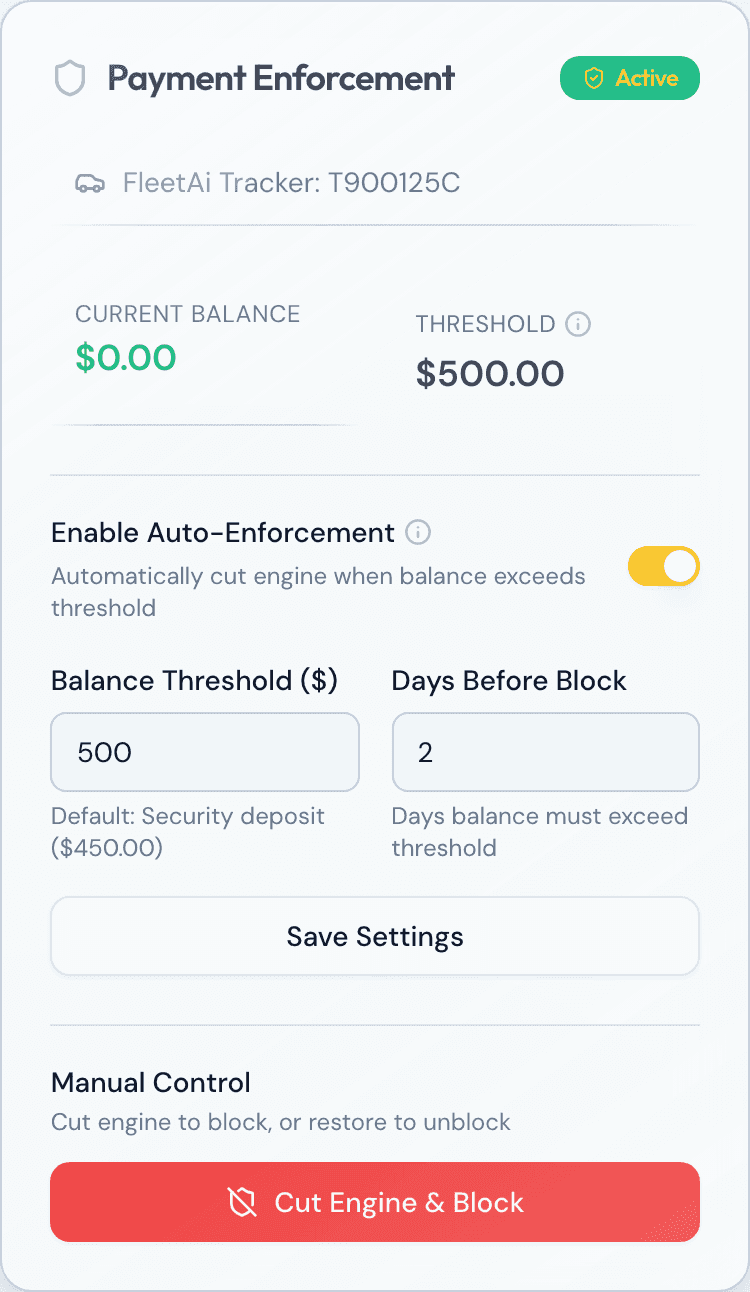
A grace period is how many days a balance can sit past due before anything changes. A threshold is how large that balance has to get before it matters enough to act on. Fleets that run this well have both written down somewhere before the first late payment ever happens, rather than deciding in the moment, driver by driver, what feels fair.
Neither number comes from the Taxi and Limousine Commission. There is no rule setting how many days a driver gets, or how much a balance has to reach before a fleet can respond. Both are terms of the private agreement between an owner and a driver, which means both only work if they are written into that agreement clearly enough to point to later.
That is a different situation from the rent itself, which is fixed by the lease term the driver already agreed to. A grace period and a threshold sit on top of that fixed number, deciding how much slack the fleet is willing to give before a missed payment turns into something that needs a response.
A grace period is not a TLC rule, but the fee still has to be
That last part is where the Commission does have a say. Its leasing rule requires every cost a driver can be charged, and the condition that triggers it, to be spelled out in the lease in plain language before it applies to anyone. A late fee is a cost like any other under that rule. If it is not written down, along with what counts as late, charging it is an overcharge, not an enforceable term.
So the grace period and the threshold are free for a fleet to set, but only once. Whatever numbers get chosen have to go into the lease before a driver signs, and then apply the same way to every driver under that lease, not adjusted after the fact for whichever one happens to be behind that week.
A walkthrough: rent due Monday
Say a fleet sets a two-day grace period and a threshold equal to one week's rent. Rent is due Monday. Monday night, nothing has changed yet, because the grace period has not run out. Tuesday, still nothing, for the same reason. By Wednesday, the grace period has passed, and if the unpaid balance is at or above the threshold, whatever the lease says happens next becomes available: a reminder, a fee, or a step toward enforcement if the fleet uses it.
The exact day only matters because the grace period was two days. A fleet that sets a five-day grace period reaches the same point on Saturday instead, from the same Monday due date. The number of days is the fleet's own choice; what matters is that the choice was made in writing, in advance, and applies whether the driver behind is new or has been on the fleet for years.
Making the threshold mean something
A threshold only holds up if it gets used the same way every time it is reached, which is harder than picking the number in the first place. A fleet that lets a longtime driver run past the threshold while cutting off a new one at the same balance is not enforcing a rule anymore. It is making a judgment call that happens to look like a rule, and that is the version a driver has real grounds to dispute.
The steadier approach treats the grace period and the threshold as a switch, not a conversation: past both, the next step in the lease happens, and before both, it does not. That consistency is also what keeps the numbers from needing to be revisited every time a particular driver's situation feels like an exception.
It also makes the numbers themselves easier to defend later. A fleet that can show the same grace period and the same threshold applied to every driver on the same lease has an answer ready if a driver ever asks why a particular week went the way it did. A fleet that decided case by case has a much harder story to tell, even when every individual decision felt reasonable at the time.
Questions fleets ask
- Does the TLC require a minimum grace period before I can act on late rent?
- No minimum is set. The Commission's rule requires only that any fee or consequence tied to a late payment be written into the lease, in plain language, along with the condition that triggers it.
- Can the grace period be different for different drivers?
- Yes, as long as your lease and your process allow for it. Many fleets set one standard grace period and vary only the threshold, since a driver on a more expensive car naturally carries a higher weekly charge.
- What happens if I act on late rent differently from one driver to the next?
- That inconsistency is exactly what turns a late-fee dispute into a complaint. The Commission's Driver Protection Unit investigates overcharges and lease disputes, and a documented, evenly applied rule is what a fleet has to point to when a driver disagrees.
- Should the threshold be a dollar amount or a number of missed weeks?
- Either works as long as the lease says which one applies and how it is calculated. A dollar threshold reacts faster to a driver who pays partially every week; a missed-weeks count is simpler to explain.
Sources
- NYC Taxi and Limousine Commission, Rules, Chapter 59 (For-Hire Vehicle Owners), Section 59A-21: Leasing a For-Hire Vehicle
- NYC Taxi and Limousine Commission, Driver Protection Unit
- NYC Taxi and Limousine Commission, TLC Rules and Local Laws
Built and used every day by a working NYC TLC fleet.